Showing posts with label Literature. Show all posts

wallpaper The Little Prince and the Boa constrictor drawing

"Once when I was six years old I saw a magnificent picture in a book, called True Stories from Nature, about the primeval forest. It was a picture of a boa constrictor in the act of swallowing an animal.
Here is a copy of the drawing:

wallpaper

In the book it said: "Boa constrictors swallow their prey whole, without chewing it. After that they are not able to move, and they sleep through the six months that they need for digestion."


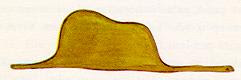
I pondered deeply, then, over the adventures of the jungle. And after some work with a colored pencil I succeeded in making my first drawing. My Drawing Number One. It looked like this:
wallpaper


I showed my masterpiece to the grown-ups, and asked them whether the drawing frightened them.

But they answered: "Frighten? Why should any one be frightened by a hat?"

My drawing was not a picture of a hat. It was a picture of a boa constrictor digesting an elephant. But since the grown-ups were not able to understand it, I made another drawing: I drew the inside of the boa constrictor, so that the grown-ups could see it clearly. They always need to have things explained. My Drawing Number Two looked like this:
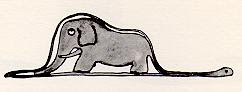
wallpaper


The grown-ups' response, this time, was to advise me to
lay aside my drawings of boa constrictors, whether from the inside or the outside, and devote myself instead to geography, history, arithmetic and grammar. That is why, at the age of six, I gave up what might have been a magnificent career as a painter. I had been disheartened by the failure of my Drawing Number One and my Drawing Number Two. Grown-ups never understand anything by themselves, and it is tiresome for children to be always and forever explaining things to them.
So then I chose another profession, and learned to pilot air-planes."

The Little Prince, by Antoine de Saint Exupéry who also did the illustrations, was published in 1943 and was translated to many languages. I believe that many of us had this book on the hands for a while when we were a child. This is part, at the beginning is still on my mind.

wallpaper The Black Cat by Edgar Allan Poe: Gothic literature

wallpaper wallpaper


The Black Cat is one of the most famous of Poe's short stories and you can read, or reread, it here.

At this site you can find the summary and some aspects of the story in a very informal way.
This is the text about it's Gothic characteristics:


The Black Cat as Gothic Literature

by Caleb Guard

"One of Edgar Allen Poe's most famously read and celebrated stories is "The Black Cat." Like most of his other stories, "The Black Cat" follows the Gothic convention of literature, a style that explores humanity's fear and fascination with the unknown. Although it originated in Germany, it was revived in the 1700's. Gothic literature investigates man's emotions, particularly fear, in the face of forces we cannot comprehend. Typical motifs of this type include darkness, horrid figures, grotesque imagery, illusion, and spaces. Stories of this sort strip us of our understanding, and sensationalize us, giving us a thrilling sense of terror that we enjoy.
Although Perverseness is the theme of Poe's story, he uses the feeling of guilt as a kind of fear. By detailing the decline in the main character's mental state throughout the story, Poe demonstrates the loss of control over one's own behavior and the horrifying effects, touching on the fear of one's own self as fear of the unknown. The narrator beings the tail claiming to be perfectly sane, but over time his account shows that he indeed has a spirit of perverseness that surprises even himself. Through a series of violent acts, he brings about his own destruction. The elements of horror in this tale are very apparent.
One primary element of gothic literature is the superstitious blurring of the line between the normal and the fantastic. Poe accomplishes this in a number of ways. The narrator, for example, is unreliable, being insane. In his account, he claims that the exact shape of a cat hanging on a noose was imprinted on a wall in the ruins of his old home. Although he tries to explain it naturally, it seems that there may be supernatural elements at work. The changing shape of the gallows on the new cat's white spot have similar effects. The narrator's wife even had a suspicion of black cats.
Revenants and haunts from the dead are often prevalent in Gothic literature. In the story, the second cat the narrator happens upon is a double of the first, and represents a revenant or ghost of the first-the one he killed. When the narrator kills his wife and walls her up, he attributes the scream from inside to the cat, although he describes it as sounding very human, as if his wife's ghost had screamed.
Gothic architecture plays with open spaces and depicts the decay and gnarling of human creations. Likewise, Poe explores a lot of psychological space in his story, and takes the reader on an emotional tour through the mind of a madman until reaching his final emotional breakdown and mental defeat. Poe's narrator is so perverse that his mind eventually becomes so twisted it is inhumane. The narrator could almost be described as a Byronic hero, being a flawed and tragic protagonist who is a danger to himself and others. Such a character is again typical of the old Gothic romances.
As Gothic movement was in part a rejection of neoclassical rationalism, so does Poe defy all logical explanation of the events in his story, his narrator being completely vexed by his own uncontrollable actions. The destruction of his house, and the eerie basement of his new one are representatives of usual structural motifs of Gothic variety. He explores perverseness as a thematic gateway to inner, inexplicable terror. "Terror is not of Germany," Poe once said, "but of the soul." Thus he revitalized in Victorian America a genre that had all but lost popularity until his time."

wallpaper The Future of Publishing: not of reading

wallpaper wallpaper wallpaper wallpaper

This video is interesting but since it was created by Penguin Group for a sales conference it is biased:
PenguinGroupUSA | 9 de março de 2010
This video was prepared by the UK branch of Dorling Kindersley Books and produced by Khaki Films (http://www.thekhakigroup.com/). Originally meant solely for a DK sales conference, the video was such a hit internally that it is now being shared externally. We hope you enjoy it (and make sure you watch it up to at least the halfway point, there's a surprise!).
Apple iPad was launched in China last Friday : "
The launch of the iPad in China drew big crowds Friday at the Apple stores in Beijing and Shanghai, as diehard fans lined up by the hundreds to be the first to have the tablet computer."
I am not sure if the smell of a new book will still be part of reading experience and it is not right to say that if paper books disappear people will not have another way of reading as this video suggests.
It even implies that all that is available at the Web are news about meaningless events but forgets that there are many journalists working for no money and doing the job that the mainstream media doesn't being one of the reasons the fact that those who pay it dictate what and how will be approached.
Some works have even started at the Web and turned into a book almost by accident as the author of a blog or a site realizes that what s/he's been doing can be printed in paper because it has a a certain characteristic and unity that should be seen as a whole, something that sites and blogs still don't allow.
Good content is everywhere if well searched and whenever I go to an office I don't even take mags from the table anymore because Lady Gaga is at all of them.
One of the strange events that happened in literature is that publishers want to have at the market blockbusters books and even impose a kind of recipe to some authors that are starting their careers and still didn't find their voices.
Ironically some good authors are still unpublished and keep doing their blogs.
I would be much more concerned if for any reason reading glasses could no longer be produced.
Take a look at the post above.

wallpaper Henry Miller: a good companion when one is having a Season in Hell

wallpaper wallpaper
I have to stop using the computer for some days because of back problems so I will share with you what I'm rereading by Henry Miller.
No, not one of the "Tropics".
It is a 163 pages book he wrote about Rimbaud:
"Henry Miller's The Time of the Assassins : A Study of Rimbaud (1949 New Directions Publishing, 163 pp).

It is not a critical essay and it has more to due with an autobiography and his moral and intellectual legacy.
He makes some approximations between artists and dedicates a long part comparing Rimbaud and Van Gogh's lives taking into consideration not the craziness but a circumstance that few biographies remember, especially about Van Gogh ,: the poverty both lived and the impact it had on their way of being in the world.
I'm having a good time rereading it and finding some thoughts that although written sixty-one years ago reflect the same problems of today.
I hope I can update the blog. If not I will try to publish some excerpts I like:

"Rimbaud restored literature to life, I have endeavored to restore life to literature. In both of us the confessional quality is strong, the moral and spiritual preoccupation uppermost."

"I think there are many Rimbauds in this world and that their number will increase with time. I think the Rimbaud type will displace, in the world to come, the Hamlet type and the Faustian type. The trend is toward a deeper split. Until the Until the old world dies out utterly, the "abnormal" individual will tend more and more to become the norm. The new man will find himself only when thewarfare between the collectivity and the individual ceases. Then we shall see the human type in its fullness and splendor."
To get the full import of Rimbaud's Season in Hell, which lasted eighteen years, one has to read..."
Henry Miller

And this is Rimbaud:
"I invented the colors of the vowels!- A black, I red, O blue, U green- I made rules for the form and movement of each consonant, and, and with instinctive rhythms, I flattered myself that I created a poetic language accessible, some day, to all the senses."
-Une Saison en Enfer, "Délires II: Alchimie du Verbe"
A black, I red, O blue, U green
Image: Preface of the book picture taken By Joe Camel published at Flickr